Legacy blog wasn’t salvageable; editors depended on engineering and recirculation/performance were weak.
Strategy
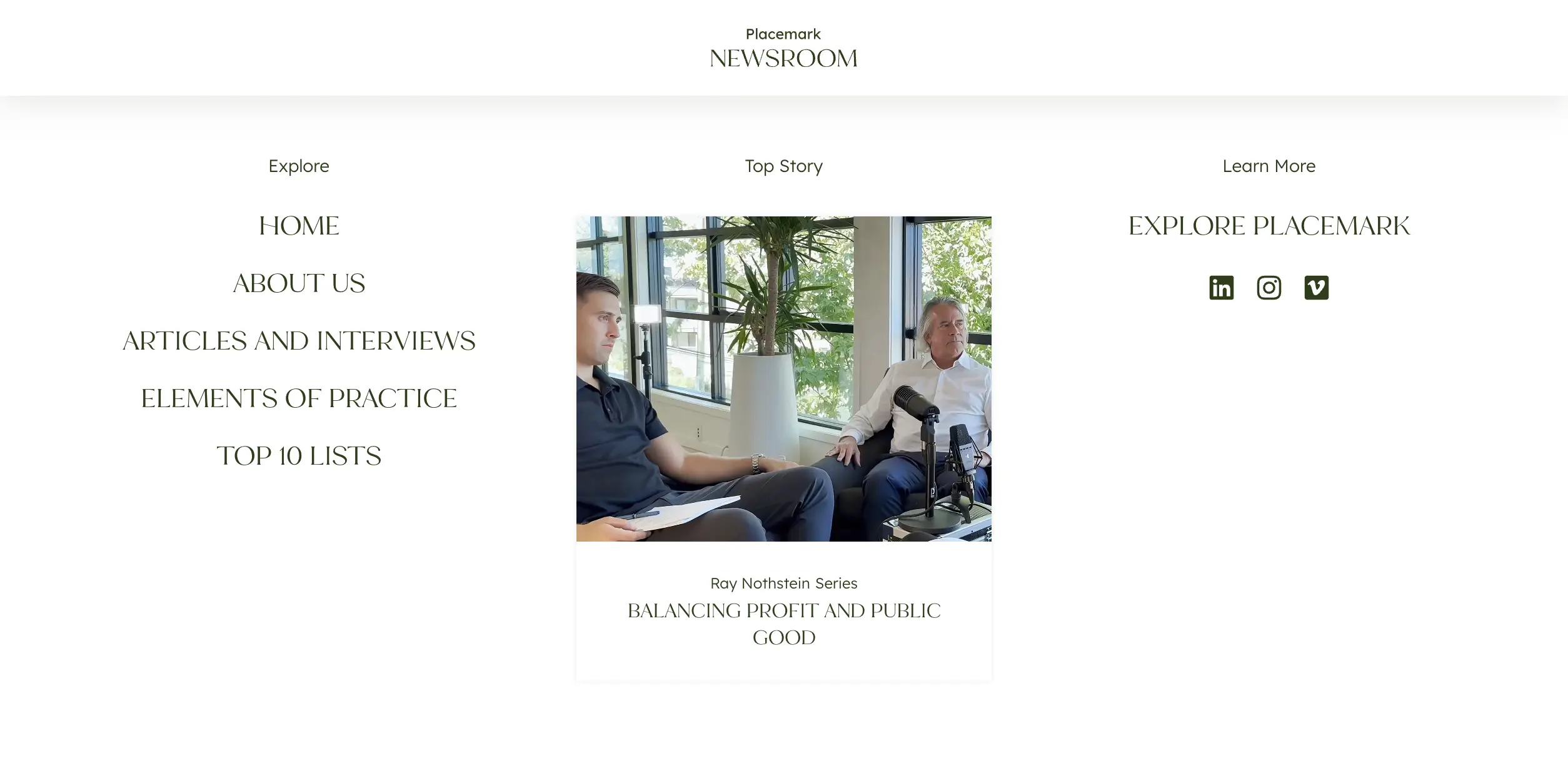
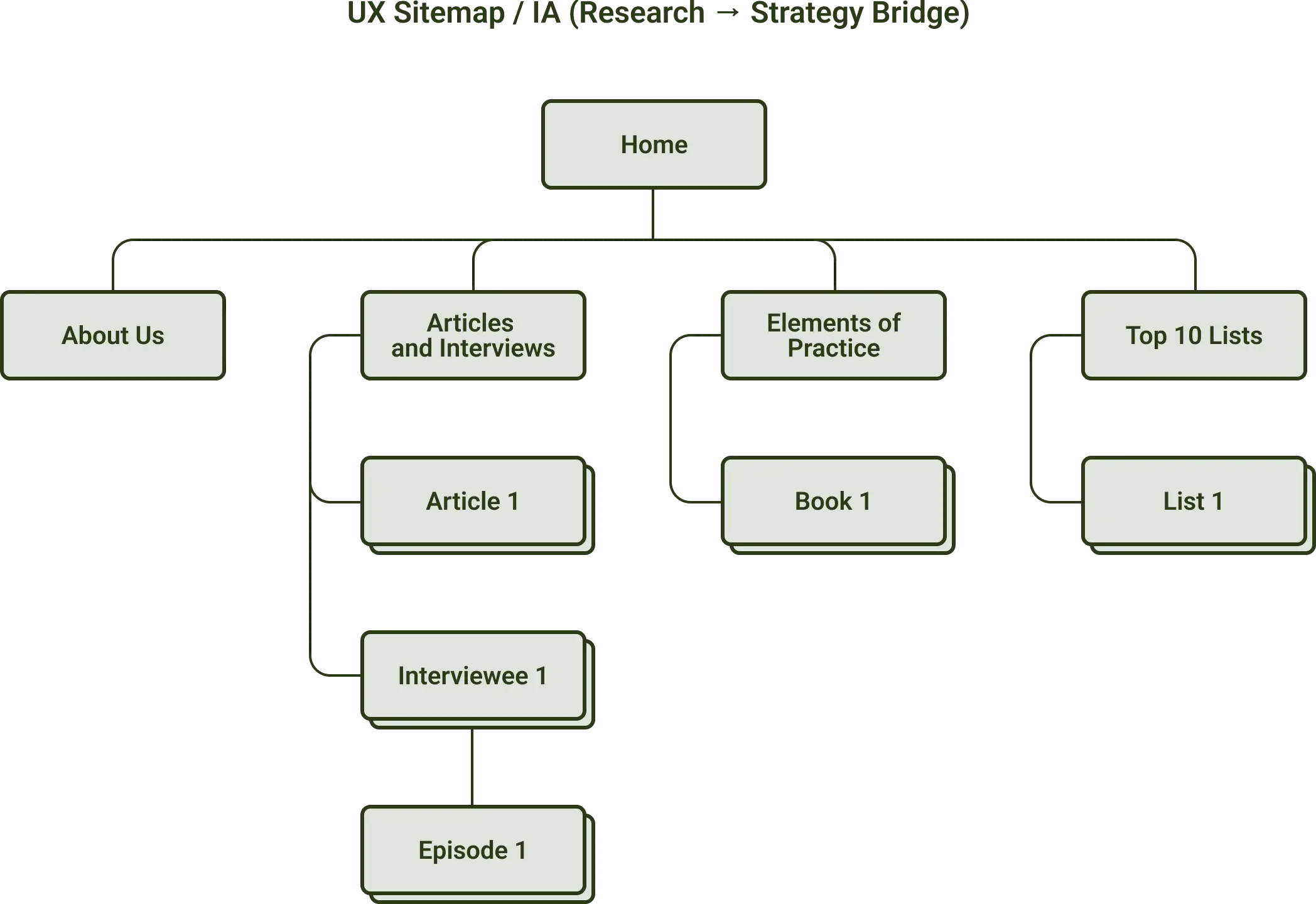
Replace with a structured newsroom (WP + Elementor + ACF + MU plugin) using narrative IA, four typed post templates, enriched navigation, and governance for assets/transcripts—prioritizing autonomy, reading flow, discovery, and CLS guardrails.
Impact
Editors publish independently; typed/conditional templates reduce rework; CLS risk mitigated with aspect-ratio & pre-sizing; hosting hard limits handled via .htaccess and conservative caching. GA4 via GTM (incl. session_qualified) verified.
Metric Tree & Success Criteria
North Star (NSM)
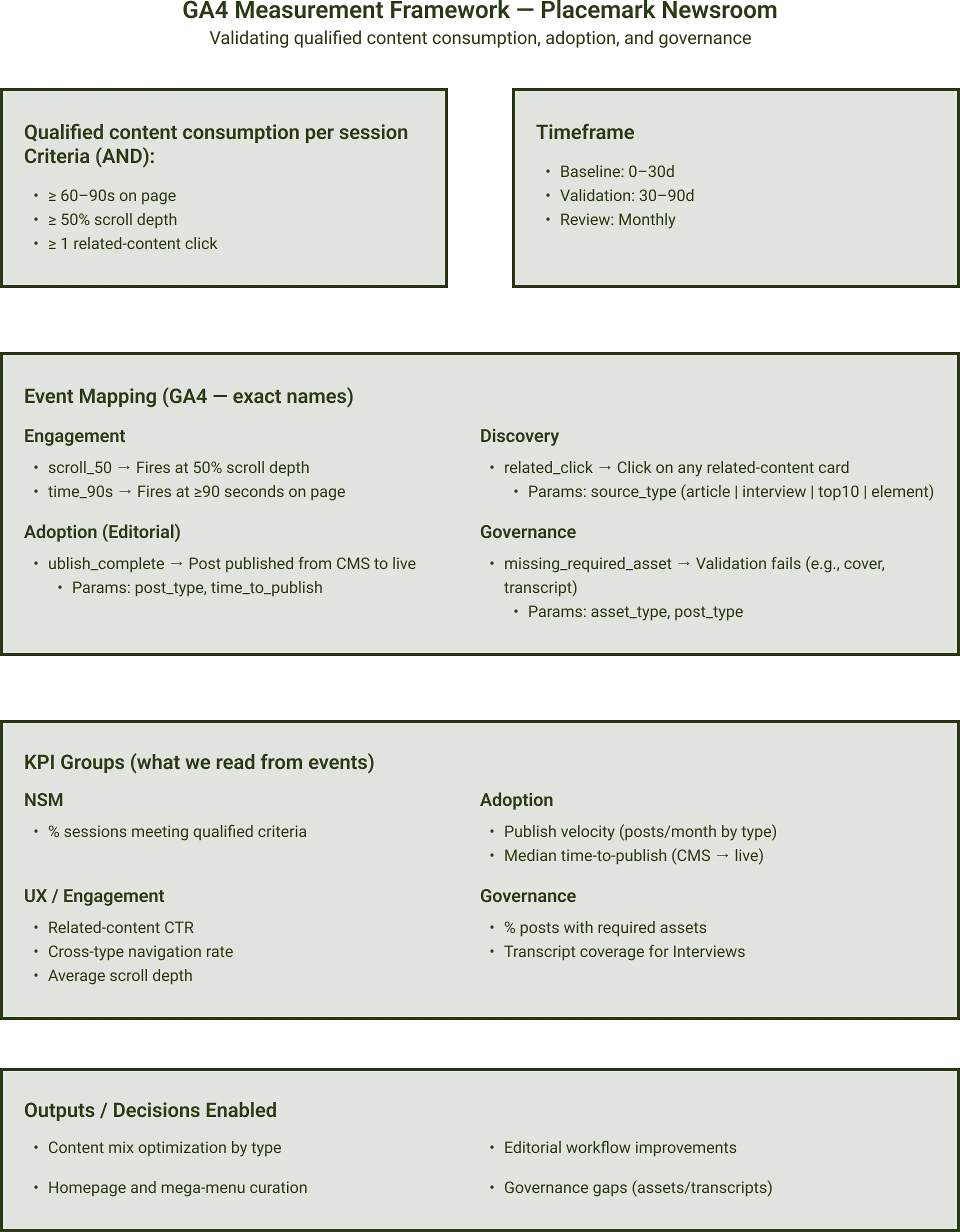
Qualified content consumption/session (≥60–90s on page, ≥50% scroll, ≥1 related click).
Activation
% of editors who publish end-to-end without engineer help.
Engagement
Related-content CTR;
cross-type navigation;
average scroll depth.
Retention
Return visits to Topics/Collections at 30/60/90 days.
Responsive: mobile-first; enforced aspect-ratio on cards to avoid CLS; images with object-fit and pre-sizing; preconnect/preload for fonts/hero.
Accessibility: full-card link with keyboard focus and aria-label; 44px touch targets; logical reading order; ALT text/transcript prompts; visible focus/hover states.
Performance UX: custom fonts with font-display: swap; hero image preloaded for LCP; conservative caching given host limits.
Tie-back to business objectives
Editorial autonomy: publish without engineering → lower ops cost, faster output.
Discovery & recirculation: enriched nav + related modules deepen reading paths.
SEO trust: typed structure + JSON-LD + dynamic meta keep content consistent and machine-readable.
Scalability: reusable components/rules reduce change time and errors.
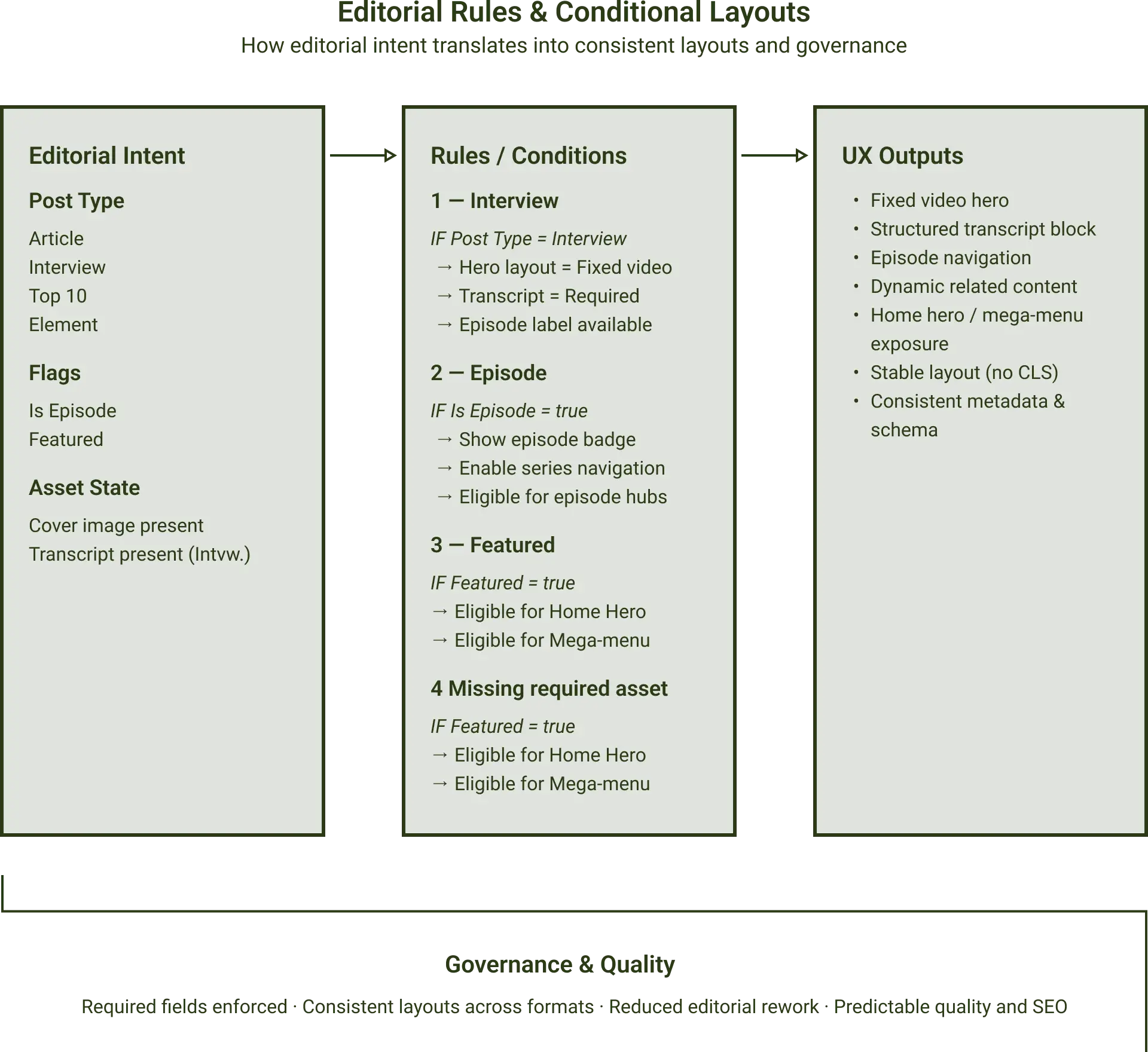
Interviews pair a fixed video header with structured transcripts to improve accessibility, SEO, and long-form consumption.
Dynamic related modules promote cross-type discovery, deepening session paths.
Results
Metric 1
Operational autonomy: editors publish end-to-end without engineering; conditional templates reduce rework. (Window: launch week + first 2 weeks.)
Metric 2
Time-to-publish: ~1–5 minutes from CMS to live (by content type). (Window: 6 timed dry-runs per type during handoff week; baseline established post-migration.)
Metric 3
Qualified consumption per session: sessions with ≥60–90s on page, ≥50% scroll, and ≥1 related click (session_qualified event). (Window: first 14–30 days baseline for the new system.)
A 30–90 day GA4 measurement plan validates the North Star metric while tracking adoption, UX, and governance to inform editorial and product decisions.
AI Patterns
Patterns (future-ready): semantic search across posts, suggested related reading, anomaly hints for underperforming topics.
Systemization & Reuse
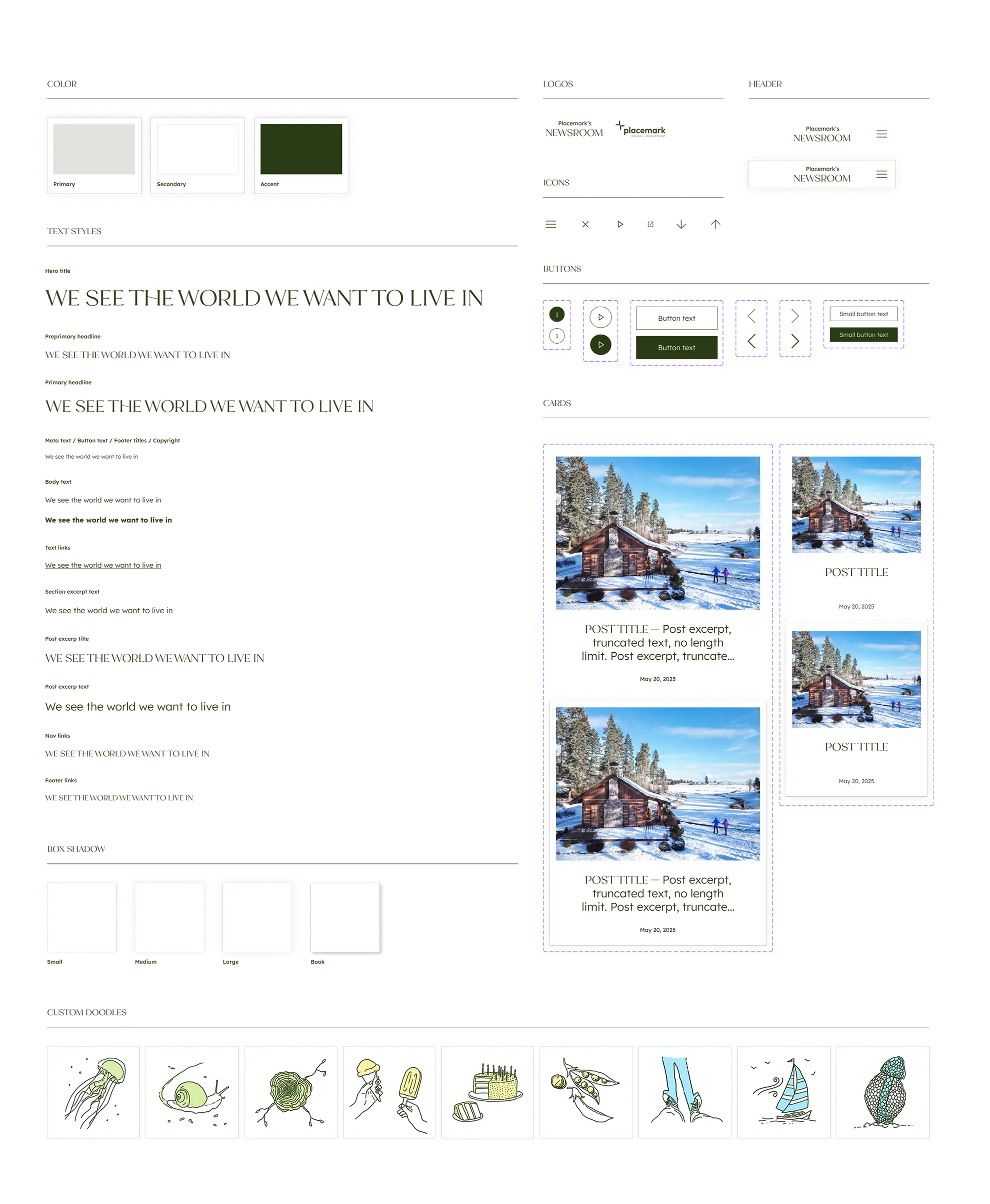
Reusable card/hero variants and related modules across Single/Archive.
Content rules (required fields, transcript policy, schema prompts).
A lightweight component kit with custom doodles keeps the system distinctive while enabling fast iteration.
What I'd Do Next
A/B headline/hero variants;
topic-based recommendations.
Credits
Contributors: Client Executive Sponsor; Editorial Owner; SME Editors; Product & UX: Juan Ávalos.
Tools/Stack: WordPress 6.8.3 + Elementor Pro + ACF; custom CSS; MU plugin; GA4 + GTM; Figma/Notion/Slack. Hosting: Webnames (LiteSpeed), SSL manual.
Tools
WordPress 6.8.3, Elementor Pro, ACF, Google Tag Manager, GA4, Google Search Console, Figma, Lighthouse/PageSpeed Insights, Webnames (LiteSpeed)